Showing posts with label substitutionary atonement. Show all posts

Wednesday, December 11, 2019

CHRIST’S RELATIONSHIP TO THE FLOCK: A Loving Relationship


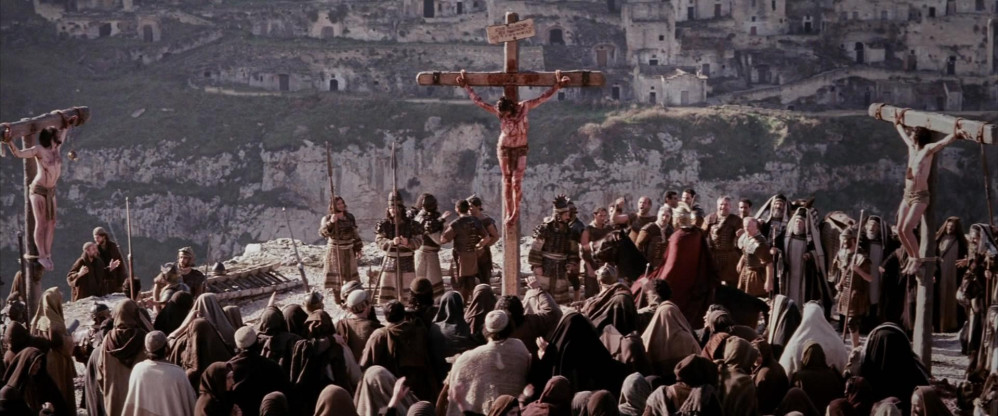
If you are ever tempted to think that God doesn’t love you, just look at the cross.  Roman power did not nail Him there, but love held Him on the tree!

This meant that His death was voluntary. He said, “I lay down My life,” (v.15b, 17-18).  He could have summoned the armies of angel warriors to swoop from heaven with fiery swords and slay His foes.  He, that by a cry of command, summoned a dead friend from a tomb, could speak a word and kill His enemies. Yet, He did not!

And notice it wasn’t just His love for the flock, but His love for the Father that moved Him to obedience, “This command I have received from My Father.” (v.18c). So, it is for the true shepherds—the spiritual leaders of the church today (Read John 21:15-19).

His death was voluntary and vicarious, “I lay down My life for the sheep.” (v.15b).  “Vicarious” means, “taking the place of another.”  Jesus suffered and was sacrificed for the sheep.

“Crown of thorns, the spear, deep in His side;
And all the pain should have been mine.
Those rusty nails were meant for me,
But Jesus took them, and let me go free!
And I should have been crucified,
I should have suffered and died.
I should have hung on the cross in disgrace,
But Jesus, God’s Son, took my place.” (Gordon Jensen).

Tuesday, October 29, 2019

YAHWEH OUR PROVIDER


“And Abraham called the name of the place, The- LORD -Will-Provide; as it is said to this day, ‘In the Mount of the LORD it shall be provided.’” (Genesis‬ ‭22:14‬‬)

God tested Abraham’s faith by commanding him to sacrifice his son Isaac. When Isaac inquired where the sacrifice was, his father replied, God will provide.  He did.  As the lad was stretched out upon the altar, and Abraham raised the knife to strike, God spoke and stopped him. The patriarch looked over and saw a ram, caught by its horns, in a thicket. Isaac was freed and the ram was sacrificed.  Thus, the place was named, “Yahweh-Yireh,” the LORD provides.

That ram represents Jesus who provided a substitutionary sacrifice for sinners.  Mary had a little Lamb, and named Him Jesus!  God provided for our greatest need!  Surely, if we can trust Yahweh Yireh for our provision of salvation, we can trust Him for lesser things.  Here is the promise: “He who did not spare His own Son, but delivered Him up for us all, how shall He not with Him also freely give us all things?” (Rom.8:32)

What do you really need from God today?  Call upon the name of the LORD—this name: “Yahweh Yireh.”

Saturday, October 19, 2019

THE SUFFERING SERVANT


“Surely He has borne our griefs And carried our sorrows; Yet we esteemed Him stricken, Smitten by God, and afflicted. But He was wounded for our transgressions, He was bruised for our iniquities; The chastisement for our peace was upon Him, And by His stripes we are healed. All we like sheep have gone astray; We have turned, every one, to his own way; And the LORD has laid on Him the iniquity of us all.” (Isaiah‬ ‭53:4-6‬‬)

No one has ever suffered as Jesus suffered. Crucifixion was one of the most torturous methods of execution ever devised. But, others were crucified—two men on either side of Him—who suffered just as much physically. Our Lord suffered hell—the punishment deserved by all of us—and not for His own sin, for He had none. He bore the full fury of the wrath of God for our sin—all of it!

We cannot imagine a holy Being who had never known sin becoming sin. We cannot fathom being Godforsaken by One who was eternally in fellowship with His Father. We cannot grasp what it would be to experience hell for all mankind of all ages as He did.

Jesus, the Suffering Servant was our substitute. Repeatedly, Isaiah reminds us, that it was “our griefs,” and “our sorrows,” He bore. It was “our transgressions,” and “our iniquities,” for which He suffered. It was to secure, “our peace” and “our healing,” that He abandoned His. Because we are “like sheep that have gone astray,” the spotless Lamb was excluded from God’s presence, so we might be included in it!

What wondrous love!  What amazing grace!  I think of the words of a song my late father wrote,

“Lord, take me back to Calvary;
Let me see Your wounded side,
Where You bled and died for me.
Let me hear, ‘It is finished,’
Salvation’s plan is now complete;
Lord, I pray, ever remind me;
Take me back to Calvary.”

Saturday, November 07, 2015

OUR GREAT DELIVERER


Inasmuch then as the children have partaken of flesh and blood, He Himself likewise shared in the same, that through death He might destroy him who had the power of death, that is, the devil, and release those who through fear of death were all their lifetime subject to bondage.  (Hebrews 2:14-15)

No matter who you are or what you have done—none is without the need of salvation or beyond the reach of the Savior.  He is mighty to save.  Jesus came into this world to deliver us from sin and bring us into the family of God.  This is the theme of Hebrews 2.

We are DELIVERED FROM THE CURSE OF SIN (v.5-9).  This speaks of Christ’s incarnation as the Last Adam. Jesus stepped out of the splendor of heaven into this sin-cursed world and did so to reverse the curse as the Last Adam.  It was the first Adam—a man who brought the curse upon this creation and it would be another Man—God become Man—that would establish a new creation.  The writer stresses that it will be a Man, not an angel that will rule over the new world to come (v.5).  Verses 6-8 come from Psalm 8.  In that psalm, David looks into the vastness of the night sky, considers the countless stars, and is amazed that he a little speck on a planet which is but a tiny particle in the cosmos, could claim the attention of the Creator who made it all.  What grace is this!  Yet, it is true.  God knows you and cares for you.  He placed humans in this world to exercise dominion over the creation.  Jesus came in human flesh as the Son of Man.  He has not brought all things under subjection to Himself yet—but He will!

We are DELIVERED BY THE CAPTAIN OF SALVATION (v.10-13).  We have Christ’s identification as the Captain of Salvation.  Jesus has so identified Himself with us that as the Father sees Him, so He sees us.  The sinless One perfectly fulfilled His mission and in His suffering on the cross could cry, “It is finished!”  The expression, “the captain of…salvation” shows Him charging the gates of Hell, securing our freedom, and leading us victoriously, “bringing many sons to glory” (v.10)!  It is our position in Christ that makes us acceptable to Holy God.  As C.S. Lewis said, “The Son of God became the Son of Man that the sons of men might become the sons of God.”  We are now in the family of God and can call God our Father in Heaven!

We are DELIVERED FROM THE CAPTIVITY OF SIN (v.14-16).  This is Christ’s intervention as the Seed of Woman.  This expression is found in Gen.3:15—the serpent struck His heel, but His heel crushed the serpent’s head.  He became one of us that He might die for us.  Jesus didn’t come to redeem fallen angels, but sinful people.  He sets us free from the fear of death.  Jesus came in fulfillment of the Abrahamic covenant.

We are DELIVERED FROM THE CONDEMNATION OF SIN (v.17-18).  That is Christ’s intercession as the Great High Priest.  He was the Priest and the offering.  He is “merciful”—willing to save; He is “faithful”—able to save!  “Propitiation” means that God is satisfied with the sacrifice.  His righteous wrath is appeased.  Our High Priest understands for He has walked among us.  Jesus knows what you’re going through.  He is not aloof from our affliction.  More than caring—wonderful grace that is—He is able to deliver you!

Saturday, June 20, 2015

WHAT A SAVIOR!


He is despised and rejected by men,
A Man of sorrows and acquainted with grief.  (Isaiah 53:3a)

The fifty-third chapter of Isaiah is surely one of the most remarkable prophecies in Scripture.  If I had no other reason to believe the Bible is the Word of God, all I would need is this chapter and I would be convinced of its Divine authorship.  Around seven hundred years before the events, Isaiah will describe Christ’s crucifixion as though he is standing at the foot of the cross.  Prophetically, he was!

How Jesus is described is shocking—from a human standpoint, it is unbelievable (v.1).  He grew up as a tender plant—a root out of dry ground (v.2a), with nothing extraordinary about His physical features (v.2b).  Jesus looked like the average Jewish man of His day.  This was not the kind of Messiah that Israel was looking for, and so they scoffed at the possibility (v.3).  Their sinful hearts led them to despise Him, and most in our time do as well.

Not only was His physical appearance shocking, the degree of His suffering was remarkable also (v.4-6).  No one ever suffered like Jesus.  His suffering was not for His own sins, but for ours.  He willingly paid the sin debt that we owed and could never pay!  Oh, how He loves us!  People scorned him as He was dying, as though He were cursed for His own crimes against heaven, when it was for theirs—and for ours—that He became a curse for us.

His suffering was indescribable, and His silence was incomprehensible (v.7-9).  He does not ask for an attorney, though it was His right.  He does not protest the illegal nature of that trial although everything about it was wrong.  He does not defend Himself.  He could have summoned Heaven’s armies with a word, but He is silent as a Lamb led to slaughter.

Sealed in a sepulcher of stone, it would appear that His cause was lost—and with His death, the death of hope.  God’s ways are not man’s ways, however.  It would be through the sacrifice of His life, that He would fulfill the success of His mission.  He would look down the corridor of time and see all His seed—His spiritual progeny (v.10-11).  His cause is vindicated and His claims validated by His resurrection.  He died, but He would not stay dead!

Jesus was not the victim; He was the Victor (v.12).  To the victor goes the spoils.  He has conquered death, hell, and the grave.  He arose in triumph and ascended in glory—then He took of His treasure and poured out spiritual gifts to His church.  One day He will return, and just as He fulfilled every prophecy concerning His first advent, He will fulfill every one pertaining to His second advent. 

Christ has changed the course of history and eternity.  He has changed my life.  He can change yours!  He made salvation possible; now we can receive it by trusting Him.

Sunday, March 01, 2015

WHEN I SEE THE BLOOD


Now the blood shall be a sign for you on the houses where you are. And when I see the blood, I will pass over you  (Exodus 12:13a)

The Passover was instituted for a memorial meal to remind Israel how God set them free from the bondage of Egypt.  The term came from the promise of God that the Death Angel would “pass over” the judgment of any house marked by the blood.  When Jesus gathered His disciples in the Upper Room mere hours before He was offered up as the Lamb of God, they met to commemorate the Passover.  With those elements, Jesus instituted the Lord’s Supper—the old covenant giving way to the new—as it would be fulfilled in Christ.  Paul said, “Christ, our Passover, was sacrificed for us.”  (1 Cor.5:7b)

The Passover speaks to THE CONSEQUENCE OF OUR SIN (Ex.12:12-13).  Sin is the reason the lamb had to die—and why Jesus, the Lamb of God, did.  The justice of God demanded payment for sin—and that payment was death.  The Passover Lamb’s blood was shed, so that we might be spared.  Being a Jew did not exempt them from the need to apply the blood.  If they did not, they would have been judged.  Being an Egyptian did not exclude them from being spared.  Had they applied the blood, they would have lived.  Only the blood makes the difference!

The Passover also reminds us of THE COST OF OUR SALVATION (Ex.12:1-7).  The price of redemption from enslavement was the blood of a lamb.  That is what it cost for us to be redeemed—the blood of Christ, as of a Lamb (see 1 Pet.1:18-19).  God took the initiative in revealing the plan of salvation to Moses.  While it is true, they had to respond in faith and obedience, the act of deliverance was by the power and according to the plan of God.  God’s plan was ever to save us from sin by the Lamb of God.  Calvary was not an afterthought or just a response to our need.  Jesus is the Lamb “foreordained before the foundation of the world” (1 Pet.1:20).

Furthermore, the Passover teaches about THE CONFESSION OF OUR SAVIOR (Ex.12:7,13).  This was a public matter—a visible sign.  It set apart those who were believers in testimony to all who witnessed the blood.  Likewise, those who have the blood applied to them today are to confess the Lamb of God (Rom.10:9-10).  It was an act of faith to trust the blood of a lamb to spare the firstborn from wrath, but they trusted the promise of God.  How much faith did they need?  Just enough to apply the blood!  Then, they would be like an army ready to move out in obedience with the Lord going before them.  The illustration should be plain for the Christian.  We are saved by faith in the blood of the Lamb.  It is not the amount of our faith, but the object of our faith that saves us.  Saving faith is expressed in a willingness to identify with and follow the Lamb of God.

Has the blood been applied to your life?

Thursday, February 12, 2015

IN MY PLACE


So Pilate, wanting to gratify the crowd, released Barabbas to them; and he delivered Jesus, after he had scourged Him, to be crucified.  (Mark 15:15)

Imagine your car stalled on railroad tracks.  A train is bearing down; death is imminent.  Then a big football player, has you shift into neutral, and with every ounce of strength he has, gives a mighty push and your car just gets off the tracks.  It is too late for him, however—he dies in your place.  Can you imagine the gratitude you would feel?  You would do anything in your power for his family, after the sacrifice he made for you.

Judgment was coming like a speeding locomotive for sinners like us.  We faced more than physical death; we were destined for the second death, which is the Lake of Fire.  What did Jesus do?  He died in our place!  How we ought to be overwhelmed with praise for such love, and do all we can for His family—the church!  The story of Barabbas illustrates this great spiritual truth.

The Gospel writer tells us that Barabbas was in prison (Mark 15:6-7), and deservedly so.  He was a criminal—a notorious one.  Barabbas was a zealot, a fanatic, an extremist.  We would liken him to Islamic terrorists today who commit violent acts to achieve political ends.  He would have been on the FBI’s “Ten Most Wanted” list had he lived in our era.  When I look into the mirror, I see Barabbas looking back.  As he defied the authority of Rome, I have rebelled against the King of Heaven.  Because we have committed such evils, we are now in prison to sin’s bondage.  The day of reckoning looms.

Barabbas was on death row.  Three crosses had been erected for the pubic execution of him and two co-conspirators.  Being the ringleader, the middle cross was his.  Can you picture the condemned man the night before his death, looking at his hands, and rubbing his wrists, as he thinks about the iron spikes that will be driven through his flesh the next day?  When he drifts off into a fitful sleep, he is suddenly awakened by the clanging of s metal door being shut elsewhere in the prison.  He jumps, breaks into a cold sweat—it sounds like a hammer ringing down on metal nails!  The dawn of his death day comes—a bloody red glow spreading across the horizon.  How apropos!  Then, he listens at the sound of a mob gathering together—they are coming to watch the spectacle.  He himself had witnessed the brutality of crucifixion, and now others would gawk at his naked body pinned on the tree.  From the distance, he hears voices—a lone man, the Roman governor is speaking, but he cannot make out the words.  Then the crowd erupts into a shout—they are calling his name!  “Barabbas!  Barabbas!” Then a brief interlude—the low hum of Pontius Pilate’s voice, again indistinguishable from the distance.  There is no mistaking the next words—they are screaming, “Crucify him!  Crucify him!”  Next, the hob nailed boots of his executioners echo down the corridor, growing closer and closer, louder and louder—he thinks they are coming to take him away, but when they open the cell door—he cannot believe his ears—they say, “Get out!  Jesus is dying in your place!”

Scripture says, “For Christ also suffered once for sins, the just for the unjust, that He might bring us to God….” (1 Pet.3:18a)  He died in my place.  I am Barabbas.

Monday, January 05, 2015

HOW GOOD DO YOU HAVE TO BE TO GO TO HEAVEN?


For I say to you, that unless your righteousness exceeds the righteousness of the scribes and Pharisees, you will by no means enter the kingdom of heaven.  (Matthew 5:20)

How good do you have to be to go to heaven?  We don’t expect to see Adolph Hitler and Joseph Stalin walking arm in arm down the streets of gold.  “Do you not know that the unrighteous will not inherit the kingdom of God?  Do not be deceived. Neither fornicators, nor idolaters, nor adulterers, nor homosexuals, nor sodomites, nor thieves, nor covetous, nor drunkards, nor revilers, nor extortioners will inherit the kingdom of God.”  (1 Cor.6:9-10)  So the question is not, “Do bad people go to heaven,” but, “How good do you have to be?”  Jesus gives the shocking answer.

He says that we must have a righteousness superior to that of the scribes and Pharisees.  Yet, they were some of the most religious people who have ever lived!  They were experts on the Bible, fasted and prayed regularly, paid tithes and gave offerings, and were consistent in gathering for worship.  Their religious code was stricter than the Law of Moses.  Jesus said, however, our righteous must exceed theirs to go to heaven!  You would have been impressed with their piety, but Jesus said of them, “These people draw near to Me with their mouth, And honor Me with their lips, But their heart is far from Me.”  (Matt.15:8)  No matter how they—or we—clean up the outside conduct, we are inwardly corrupt.  The self-righteousness of the Pharisees is inadequate.  Compared to the irreligious, such people seem righteous, but God doesn’t grade on the curve.  Each of us are examined in relation to His perfect holiness—and all of us miss that mark, falling woefully short of the glory of God (Rom.3:23).

So, how good must you be to go to heaven?  You must be as good as God!  It gets worse, “For the wages of sin is death…” (Rom.6:23a), and that isn’t limited to physical death, but, “the second death…the lake of fire.” (Rev.20:14-15).  What bad news for all of us!  Yet, the very word Gospel means, “good news.”  The good news is that the rest of Romans 6:23 goes on to say, “but the gift of God is eternal life in Christ Jesus our Lord.”  There was one Perfect Man—Jesus Christ—that met all the righteous demands of God.  Not even His enemies could find real fault in Him.  He paid the price of death to meet the impeccable standard of justice a Holy God required.  Even more, when we place our faith in Christ, His flawless righteousness is deposited in our account, so that when God views believers, He doesn’t see us as we were—we have been crucified with Christ (Gal.2:20)—He sees us as we are—in Christ.  “For He made Him who knew no sin to be sin for us, that we might become the righteousness of God in Him.”  (2 Cor.5:21)

Remember that list of bad folks—like us—shut out of Heaven?  Paul went on to add, “And such were some of you.  But you were washed, but you were sanctified, but you were justified in the name of the Lord Jesus and by the Spirit of our God.”  (1 Cor.6:11, emphasis added).  As Paul Harvey famously said, “And now you know…the rest of the story!”