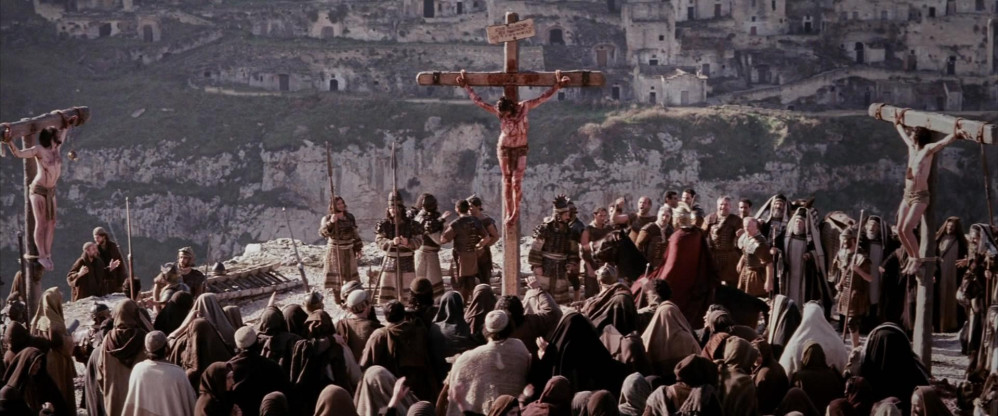
Practical discussion on contemporary life challenges from an ancient perspective.
Tuesday, November 26, 2019
THE LIGHT OF THE WORLD REVEALED
“Then Jesus spoke to them again, saying, ‘I am the light of the world. He who follows Me shall not walk in darkness, but have the light of life.’” (John 8:12)
The purpose of light is to reveal—to shine out and to show up a thing. This revelation is the outshining of God’s very glory.
Christ shines out the person of God. When He claims to be the Light, He claims to be God. Is He a liar, lunatic, or Lord? Those are the only options. He is either a deceiver, delusional, or Deity. John was an eyewitness to His glory revealed on the Mountain of Transfiguration and testified, “And the Word became flesh and dwelt among us, and we beheld His glory, the glory as of the only begotten of the Father, full of grace and truth.” (John 1:14). Paul saw that Light and said Jesus is “the image of the invisible God” (Col.1:15). Hebrews 1:3 speaks of, “the brightness of His glory and the express image of His person….”
Christ shows up the path to God. The Lord had just attended the Feast of Tabernacles (7:2). This feast celebrated the pilgrimage of the Jews through the wilderness. You may recall the glory cloud—a pillar of cloud that directed them by day and a pillar of fire by night. This glory cloud rested above the tabernacle. When it moved, they moved. As the glory cloud led the Israelites through the wilderness, so Christ is the Light of the world to guide us to God and in the path of His will day by day until we reach the eternal light of glory.
“For it is the God who commanded light to shine out of darkness, who has shown in our hearts to give the light of the knowledge of the glory of God in the face of Jesus Christ.” (2 Cor.4:6).
Monday, November 25, 2019
THE LIGHT OF THE WORLD
“Then Jesus spoke to them again, saying, ‘I am the light of the world. He who follows Me shall not walk in darkness, but have the light of life.’” (John 8:12)
Seven times, in John’s Gospel, Jesus identified Himself with metaphors in which He connected Himself with Yahweh, “I AM.” The one we will consider this week is Jesus claim, “I am the light of the world.”
Light means life. Without it, living things would die. The plants would shrivel and decay, and with that animals and humans would perish.
Jesus uses that to illustrate that He as the Light of the World gives life to the world. He is the source and sustainer of life—real life, eternal life. We cannot have it apart from Him.
Without that light we stumble in the darkness—lost and headed into the Abyss, and a doom that is the deepest darkness of utter despair. Yet, today the Light of the World beckons us to come to Him, and by following that Light we find eternal life.
There shines the Beacon of Hope. Do you see it? Have you come? There is a way out of the darkness!
Friday, November 22, 2019
THE BREAD OF LIFE: Come to the Table
“Do not labor for the food which perishes, but for the food which endures to everlasting life, which the Son of Man will give you, because God the Father has set His seal on Him.” (John 6:27)
I have heard this story several times, and now share it with you:
Years ago, in the Midwest, there lived an ungodly German farmer named Klein. His house was across from a Lutheran church, yet he wouldn’t cross the road to attend. But one day, he heard some Bible school children singing, “Jesus died for all mankind.” He thought they were singing, “Jesus died for old man Klein.” The thought that Jesus died for him personally melted his icy heart and he gave his life to Christ.
Jesus is the Bread for the world, but I want you to now He is Bread for you. Jesus died for the sins of the world, but specifically, He died for Betsy, John, Susie, James—put your name in there. The table is set. Eternal life is as simple as reaching out a hand of faith and receiving Christ. There is no goodness you must attain and no works you must do, for this is God’s work: “Jesus answered and said to them, ‘This is the work of God, that you believe in Him whom He sent.’” (John 6:29)
Will you come to the table? BREAD OF LIFE: Come to the Table
“Do not labor for the food which perishes, but for the food which endures to everlasting life, which the Son of Man will give you, because God the Father has set His seal on Him.” (John 6:27)
I have heard this story several times, and now share it with you:
Years ago, in the Midwest, there lived an ungodly German farmer named Klein. His house was across from a Lutheran church, yet he wouldn’t cross the road to attend. But one day, he heard some Bible school children singing, “Jesus died for all mankind.” He thought they were singing, “Jesus died for old man Klein.” The thought that Jesus died for him personally melted his icy heart and he gave his life to Christ.
Jesus is the Bread for the world, but I want you to now He is Bread for you. Jesus died for the sins of the world, but specifically, He died for Betsy, John, Susie, James—put your name in there. The table is set. Eternal life is as simple as reaching out a hand of faith and receiving Christ. There is no goodness you must attain and no works you must do, for this is God’s work: “Jesus answered and said to them, ‘This is the work of God, that you believe in Him whom He sent.’” (John 6:29)
Will you come to the table?
Thursday, November 21, 2019
THE BREAD OF LIFE: Jesus as the Security of Life
The focus in John 6:37 is preservation. “All that the Father gives Me will come to Me, and the one who comes to Me I will by no means cast out.”
God’s seal of approval has been placed on Christ and we are accepted in Him, “Do not labor for the food which perishes, but for the food which endures to everlasting life, which the Son of Man will give you, because God the Father has set His seal on Him.” (27)
If I come to Him, I will never be cast out and never thirst (v.35-37), yet to die in sin is to be cast out and suffer everlasting thirst in unquenchable fire. Now, I must truly believe in Him. Many just fake it, “But I said to you that you have seen Me and yet do not believe.” (v.36). Such frauds will be exposed in the end (see Matt.7:21-23).
So how are we to understand this? How are we to be sure?You may say, “Pastor I thought you were talking about the assurance of salvation; I’m not being more assured, but becoming more anxious. What am I supposed to do?”
Let’s dive back into our text. The first century audience had the same question, “Then they said to Him, ‘What shall we do, that we may work the works of God?’” (v.28). Look at Jesus’ answer, “Jesus answered and said to them, “This is the work of God, that you believe in Him whom He sent.” (v.29).
Jesus is the Bread. He promises eternal life if we receive Him. Do you believe Him? That is how we receive Him. Reach out a hand of faith—feeble and trembling though it may be—and take it! Trust Him!
How many will Jesus lose who come to Him? “This is the will of the Father who sent Me, that of all He has given Me I should lose nothing, but should raise it up at the last day.”(v.39). Jesus loses NONE! He gives us everlasting life , “And this is the will of Him who sent Me, that everyone who sees the Son and believes in Him may have everlasting life; and I will raise him up at the last day.” (v.40). All who truly come to Him will be raised to Heaven! Everlasting means lasting forever. You cannot have it and lose it. If you lose it, you never had it, for that would not be everlasting!
Wednesday, November 20, 2019
THE BREAD OF LIFE: Jesus as the Sustainer of Life
Read John 6:48-58.
The focus here is provision. As the Jews fed daily on the manna and it sustained them, so Jesus is to be the nourishment of our soul. Only as we feed on Him can we have satisfaction, “Do not labor for the food which perishes, but for the food which endures to everlasting life, which the Son of Man will give you, because God the Father has set His seal on Him.” (v.27).
Consider the context of this teaching. In chapter 6, thousands gathered to hear Jesus. They become hungry, and all the food they could find was five loaves of bread and a couple of fish (v.9). Then Jesus performs a miracle and multiplies the loaves and fish till all are fed and twelve baskets of leftovers are collected—one for each disciple!
The crowd went wild and wanted to crown Jesus as king (v.14-15). Instead, Jesus walked away. Why? He had not come to be a celebrity. He had not come to be a Bread King for people who only cared about their physical life and had no concern for their soul (v.26).
Most people labor for the food that perishes—for the material things of this world. Jesus asked, “For what does it profit a man if he shall gain the whole world and lose his own soul?” (Mark 8:36). You can cram all this world offers into that hole in your soul, and nothing will satisfy you, for it is a God-shaped hole only He can fill. Augustine said, “Thou hast formed us for Thyself, and our hearts are restless till they find their rest in Thee.”
Taking in Jesus day by day—abiding in Him as our very life—not only is our source of satisfaction, but of strength. His life produces power and productivity, just as bread sustains our physical life. Look to Him, lean on Him today; Jesus is your life!
Tuesday, November 19, 2019
THE BREAD OF LIFE: Jesus As The Source of Life
Read John 6:27-47.
Jesus identifies Himself as the Bread of Life. The focus in these verses is predestination.
“All that the Father gives Me will come to Me, and the one who comes to Me I will by no means cast out. ...This is the will of the Father who sent Me, that of all He has given Me I should lose nothing, but should raise it up at the last day. ...No one can come to Me unless the Father who sent Me draws him; and I will raise him up at the last day.” (v.37, 39, 44)
Let us not avoid a doctrine clearly taught in Scripture because some have taken this doctrine to extremes. Some emphasize the freewill of man to the neglect of God’s sovereignty, while others stress predestination to the neglect of human responsibility. We must choose both, for both are taught in Scripture—and in this text for one. They are not contradictory, but complementary—two sides of the same coin of salvation.
“And Jesus said to them, ‘I am the bread of life. He who comes to Me shall never hunger, and he who believes in Me shall never thirst. ...All that the Father gives Me will come to Me, and the one who comes to Me I will by no means cast out. ...Most assuredly, I say to you, he who believes in Me has everlasting life.’” (v.35, 37, 47). God calls, but I must come. God speaks, but I must believe.
You may argue, “I can’t reconcile the two ideas.” The great Baptist Pastor of the 19th century, Charles Spurgeon, was asked how to reconcile these and he answered, “I never try to reconcile friends.”
These ideas have been the source of debate among theologians for 2000 years of church history, and so we won’t solve the puzzle today. The issue is that God is God and we are not. We are not omniscient. “The secret things belong to the Lord our God, but those things which are revealed belong to us and to our children forever, that we may do all the words of this law.” (Deut.29:29)
Here’s what is revealed—Salvation is of the Lord. The Bible portrays us as spiritually blind. The Spirit must open our eyes to see. We are scripturally deaf—and God must enable us to hear. We are dead in sin, and God must give us life. Lost sheep cannot find their way home, but the Good Shepherd seeks them. Jesus came down for us, when we could not go where He was. He is the Bread from Heaven.
Bread is made when living grain is cut down, crushed, and the flour thrust into an oven. So, Jesus suffered for our salvation. But God doesn’t cram the bread down my throat. I must receive it. Have you?
Monday, November 18, 2019
THE BREAD OF LIFE
“I am the bread of life.” (John 6:48)
Jesus uses seven metaphorical, “I am,” statements that are recorded in John’s Gospel to describe Himself. That Jesus would identify Himself as, “I am,” shows His intention to connect Himself with the great I AM of the Old Testament—that Jesus and Yahweh—Father and Son—are one. Jesus is fully God, and this fits John’s purpose in presenting Christ’s deity. In these final seven weeks of 2019, with God’s help, we will examine each of these, “I am,” expressions. The first is His claim, “I am the bread of life.”
Ponce DeLeon traversed Florida in 1512 searching for the fountain of youth. That search, though fruitless, was neither new nor novel. Engraved in the human heart is a desire to live forever. It is the deep hunger of our soul. In answer to that hunger we hear Jesus claim in John 6:51, “‘I am the living bread which came down from heaven. If anyone eats of this bread, he will live forever; and the bread that I shall give is My flesh, which I shall give for the life of the world.’”
As bread feeds our body and sustains our physical life, so Jesus feeds our soul and sustains our spiritual life. When we, by faith, receive Christ as our Lord and Savior, we feed on this Living Bread. This is eternal life. Then, it is our privilege to have a feast on Him, day after day. Is Jesus your Bread of Life?
Friday, November 15, 2019
IS THERE STUBBORN REJECTION OR SCRIPTURAL RECEPTION?
“‘But they refused to heed, shrugged their shoulders, and stopped their ears so that they could not hear. Yes, they made their hearts like flint, refusing to hear the law and the words which the LORD of hosts had sent by His Spirit through the former prophets. Thus great wrath came from the LORD of hosts. Therefore it happened, that just as He proclaimed and they would not hear, so they called out and I would not listen,’ says the LORD of hosts. ‘But I scattered them with a whirlwind among all the nations which they had not known. Thus the land became desolate after them, so that no one passed through or returned; for they made the pleasant land desolate.’” (Zechariah 7:11-14)
If you were to ask me about how many responded to the sermon last Sunday, I would tell you, “100% ! Everyone responded. Some said, ‘Yes,’ and some said, ‘No,’ but all responded.” Each time you walk out of the meeting house doors, you leave better or worse—closer to God or farther away.
Notice in these verses how the rejection of the Word became more pronounced. Truth makes a heart healthy or hard.
Arteriosclerosis is a physical malady where the arteries that carry the life-giving flow of blood become hard and clogged by cholesterol. The result can be stroke, heart-attack, even death. It is all the more deadly because the development of the disease is slow, gradual, almost imperceptible.
Spiritual arteriosclerosis is the hardening of our heart against the Word and the Lord. Likewise, the sinister, subtle nature of it can be deadly to the state of our soul. There is a way back to God. Repentance can be the surgical scalpel to open our heart and begin restoring our health.
What you have just read will be helpful or hurtful, depending on your response. Don’t shrug your shoulders, stop your ears, and stiffen your neck against the Word, as these did in Zechariah’s day.
Thursday, November 14, 2019
IS THERE PROFESSED FAITH OR PRACTICAL FRUIT?
“Then the word of the LORD came to Zechariah, saying, ‘Thus says the LORD of hosts: “Execute true justice, Show mercy and compassion everyone to his brother. Do not oppress the widow or the fatherless, the alien or the poor. Let none of you plan evil in his heart against his brother.”’”
(Zechariah 7:8-10)
Outwardly, we come to worship, and profess our faith, but far too often, inwardly, our hearts are far from God. Our hearts have not been prepared for encountering God.
These verses in Zechariah connect the two. Justice, mercy and compassion are essential heart preparations for worship. If we are not in a right relationship with people we aren’t in a right relationship with God. Jesus told us when we bring our gift to the altar and remember our brother has ought against us, we must first go to them, and attempt reconciliation, before our worship will be acceptable. John said that if we can’t love our brother whom we can see, how can we claim to love a God we cannot see?
The fact is that where bitterness, anger, and an unforgiving spirit are manifest, God will not manifest His presence. Yet, it is not enough to seek to remove these relational cancers. We must actively pursue justice, mercy, and compassion.
Wednesday, November 13, 2019
IS THERE SELF-CENTEREDNESS OR GOD-CONSCIOUSNESS?
“Then the word of the LORD of hosts came to me, saying, ‘Say to all the people of the land, and to the priests: “When you fasted and mourned in the fifth and seventh months during those seventy years, did you really fast for Me—for Me? When you eat and when you drink, do you not eat and drink for yourselves? Should you not have obeyed the words which the LORD proclaimed through the former prophets when Jerusalem and the cities around it were inhabited and prosperous, and the South and the Lowland were inhabited?”’” (Zechariah 7:4-7)
What they were doing was worthless. It wasn’t worship, for it was not directed to God. They were trying to earn points with Him. That isn’t love.
The attitude in marriage would be, “I’ll scratch your back, if you scratch mine.” We expect a quid pro quo. That’s a contractual partnership, not a covenant relationship!
With the Lord, it may be expressed this way, “Well God, I went to church today! How many points do I get for that?”
God’s answer is, “Zero!” Worship isn’t about us; it’s about God! Yet, so much of our worship is about our preferences, our style of music, and how many spiritual goose bumps we get.
A man was leaving the church, complaining about the music. “I didn’t like the hymns you chose today.” The pastor simply said, “That’s okay; we weren’t singing them for you.”
The late William Temple, Archbishop of Canterbury, said, “To worship is to quicken the conscience by the holiness of God, to purge the imagination by the beauty of God, to open the heart to the love of God, and to devote the will to the purpose of God.” Let us seek to offer that kind of worship!
Tuesday, November 12, 2019
IS THERE EMPTY RITUAL OR EXCITING REALITY?
“Now in the fourth year of King Darius it came to pass that the word of the LORD came to Zechariah, on the fourth day of the ninth month, Chislev, when the people sent Sherezer, with Regem-Melech and his men, to the house of God, to pray before the LORD, and to ask the priests who were in the house of the LORD of hosts, and the prophets, saying, ‘Should I weep in the fifth month and fast as I have done for so many years?’” (Zechariah 7:1-3)
Since the fall of Jerusalem and destruction of the Temple 70 years before, the people had a time of weeping and fasting for the judgment they had experienced. Now, God in His grace, had returned them to the land. The pressure was off and they wanted to focus their attention elsewhere.
How often we have been guilty of the same! Difficulties drove us to God, but when they eased, our hearts turned from God. Remember that sunny September 11, 2001, when the skies turned black from the smoke of jet fuel and ash as the twin towers were brought down by terrorists? Remember that first weekend as churches were filled? How quickly we have forgotten!
Think about the implications of their questions: they were going through the motions of worship but were bored with it all. It is like a mother waking a kid on Sunday morning and telling them it’s time to get ready for church. “Aw, Mom, do I have to?”
Has the fire gone out of your relationship with God? If it has, should you weep and fast—seeking the Lord—and the rekindling of that flame you once had? Yes—and urgently!
Monday, November 11, 2019
THE STATE OF YOUR SPIRITUAL HEALTH
“Yes, they made their hearts like flint, refusing to hear the law and the words which the LORD of hosts had sent by His Spirit through the former prophets. Thus great wrath came from the LORD of hosts.” (Zechariah 7:12)
Each year, I have a physical. At my age you get poked and prodded—not something I look forward to—but, very important. The doctor will examine me to determine the state of my physical health.
As we head into the final months of 2019, what is the state of your spiritual health? It is an opportune time for us to take an examination.
Not only are we to be concerned about our spiritual health, but the health of the church—the body of Christ. A healthy church has five focal points: worship, evangelism, fellowship, discipleship and ministry. These are the vital signs we must evaluate.
This week we are going to get under the X-ray of the Word of God. The place to begin is in the area of worship—so crucial to spiritual health. If we aren’t healthy here, we won’t be anywhere for this is the matter of the heart. As you can see in the passage in Zechariah, the people had spiritual heart trouble.
Have you checked your pulse lately? Does your heart beat with a passion for love for God? Or, is there a hardening of the arteries—clogged with concern for the things of the world?
Friday, November 08, 2019
YAHWEH OUR MASTER
“Hear, all you peoples! Listen, O earth, and all that is in it! Let the Lord GOD be a witness against you, The Lord from His holy temple.” (Micah 1:2)
As we conclude our study of the names of God found in the Old Testament, we consider the Hebrew word Adonai. In the English translation it is differentiated from Yahweh by being rendered with lower case, “Lord,” in contrast to, “LORD,” all in the upper case or as in the passage here, GOD (Yahweh), rather than God (Elohim).
Adon is the singular form and can refer to men and angels, as lords and princes. Adonai is the plural, literally, “Lords,” and most Bible scholars think it points to the manifold majesty of God, but I believe is also suggestive of God’s Triune being.
It is a name used hundreds of times in the Old Testament and points to God’s sovereign reign. He is the Master, Owner, and Ruler of all as the name suggests. Adonai is also seen in conjunction with Yahweh as in the text in Micah 1:2. In this passage, Yahweh, is translated GOD—all in capital letters. The Great I AM is Lord of all.
We should be reminded today that God is sovereign over all things. Nothing happens but by His permission and He has decreed that the end result will be for His glorious purposes. It is comforting to know in a world that often appears out of control that the Lord is firmly in control.
We can fall in brokenness and submission upon the Rock of God’s will and receive His grace, or we can resist and have that Rock of His will fall on us and break us in His judgment. In this we have a choice, but in God accomplishing what He has decreed there is no choice.
Paul assures us in Philippians 2:9-11 that someday every knee will bow and every tongue confess that Jesus is Lord. The holy angels of heaven will bow, the saints and sinners of men will bow, and even the demons of hell will bow. But, the only ones who will be saved then are those who confess He is Lord now.
Thursday, November 07, 2019
YAHWEH IS PRESENT
“All the way around shall be eighteen thousand cubits; and the name of the city from that day shall be: THE LORD IS THERE.” (Ezek.48:35)
The prophet had witnessed the glory of God depart from the Temple—a temple that would be destroyed.
“Then the glory of the LORD departed from the threshold of the temple and stood over the cherubim. And the cherubim lifted their wings and mounted up from the earth in my sight. When they went out, the wheels were beside them; and they stood at the door of the east gate of the LORD’s house, and the glory of the God of Israel was above them.” (10:18-19).
Ichabod—the Hebrew word meant, the glory is departed (see 1 Sam.4:21-22).
Now, at the end of Ezekiel’s visions, he sees a future day—a day that we await. In the final verse of the prophecy, we see Jerusalem when Christ returns, and the glory of God is manifest again. The Hebrew term is, “Yahweh Shammah,” the LORD is there. Yahweh is present with His people.
Even today, Christ is with us in the person of the Holy Spirit. He promised, “And I will pray the Father, and He will give you another Helper, that He may abide with you forever— the Spirit of truth, whom the world cannot receive, because it neither sees Him nor knows Him; but you know Him, for He dwells with you and will be in you. I will not leave you orphans; I will come to you.” (John 14:16-18)
Wherever you go today, God is Yahweh Shammah. Whatever you may face, you do not face it alone, for God is there. “For He Himself has said, ‘I will never leave you nor forsake you.’” (Heb.13:5b). God is with us, and someday soon we will see Him face to face, and abide in the fullness of His glory forever!
Wednesday, November 06, 2019
YAHWEH OUR RIGHTEOUSNESS
“In those days Judah will be saved, And Jerusalem will dwell safely. And this is the name by which she will be called: THE LORD OUR RIGHTEOUSNESS.” (Jer.33:16)
Jesus said that unless our righteousness exceeds that of the scribes and Pharisees we cannot enter the kingdom of heaven. Who among us could qualify?
Those were some of the most scrupulously religious people who ever lived. They read and memorized the Scriptures. They prayed three times a day and fasted twice a week. They paid tithes even of the herbs of their field. They would not even eat an egg that had been laid on the Sabbath Day! The Pharisees were exceptional in religion, and yet lacking in righteousness.
The righteousness God demands is His righteousness. Heaven is a sinless place and God demands utter holiness. I am in trouble and so are you should we try to measure up.
The bad news is we all fall far short (Rom.3:23). The penalty is death—the second death in hell (Rom.6:23a). By trying to keep God’s moral law, we merely show ourselves condemned.
The good news is that when we call on the name of the Lord, His righteousness is deposited into our account! Eternal life is a gift (Rom.6:23b). Our sins are blotted out by the atoning blood of Christ and we are placed in right standing before God, possessing the very perfection of the Son of God, received by faith in Him and His finished work. “For He made Him who knew no sin to be sin for us, that we might become the righteousness of God in Him.” (2 Corinthians 5:21)
Yahweh Tsidkenu! The LORD our Righteousness!
Tuesday, November 05, 2019
YAHWEH OF HOSTS
“Then Elijah said, ‘As the LORD of hosts lives, before whom I stand, I will surely present myself to him today.’” (1 Kings 18:15)
Yahweh Sabaoth, translated, “LORD of hosts,” is one of the most frequent names of God that we find in the Old Testament, being used about two hundred and fifty times. It means that He is the Lord God of spiritual armies—Yahweh who rules over the angelic hosts. These supernatural beings of incredible might and splendor are creations of the Lord. Their allegiance is to Him and they move at His command.
In a number of ways, the angels are different than humans, yet in one way they are the same—they were created with free will, and with the capacity to obey God came the possibility to disobey. As hard as it is to imagine, one-third of these heavenly beings follow Satan in his rebellion against God. The twelfth chapter of Revelation gives an overview of this cosmic clash as it describes war in heaven.
The outcome of the war is never in doubt. Satan has no hope of vanquishing God. Yahweh sends forth His holy hosts of angel warriors, and the Devil is cast out. Satan still makes trouble for the church today, and will stir up one final war against Christ on earth, but at last he and his demonic army will be cast into the Lake of Fire.
In the text today, we find Elijah, the man of God standing alone against the power of the malevolent monarchs, King Ahab and his consort, the wicked Jezebel. Yet, he is fearless, for he knows he is not alone. His trust is in the LORD of Hosts.
Today, we also have angels watching over us. All about, unseen, are these mighty ones, ready to minister to the saints. Yet, we do not worship them and trust in them, but in their Maker and Commander, Yahweh Sabaoth, the LORD of Hosts!
Monday, November 04, 2019
YAHWEH OUR PEACE
“So Gideon built an altar there to the LORD, and called it The- LORD - Is -Peace.” (Judges 6:24a)
God raised Gideon up to overthrow the Midianites that were oppressing Israel. He felt inadequate—troubled and anxious—but, God gave him peace in his heart. Thus, he memorializes that experience in constructing an altar and naming it Yahweh Shalom—the LORD our Peace. It is a truth we ought treasure in our hearts today that leads us to worship that name!
Are you troubled today? I think of the angelic announcement to the shepherds, “Do not be afraid, for behold, I bring you good tidings of great joy….Glory to God in the highest and on earth peace, goodwill toward men!” (Lk.2:10a, 14).
God does not give peace apart from Himself. He gives Himself as our peace, “For He Himself is our peace,” (Eph.2:14). Through Jesus we have “peace with God” (Rom.5:1) and in that reconciled relationship live in “the peace of God, which surpasses all understanding, [that] will guard your hearts and minds through Christ Jesus.” (Phil.4:7).
Here is the promise of Christ, “Peace I leave with you, My peace I give to you; not as the world gives do I give to you. Let not your heart be troubled, neither let it be afraid.” (John 14:27). I pray, “Now the God of peace be with you all. Amen.” (Rom.15:33).
Friday, November 01, 2019
YAHWEH OUR SANCTIFIER
“Consecrate yourselves therefore, and be holy, for I am the LORD your God. And you shall keep My statutes, and perform them: I am the LORD who sanctifies you.” (Leviticus 20:7-8)
God is holy and we are commanded to be holy. Yet, an outward standard alone is insufficient to accomplish this. Paul acknowledged that frustration in Romans 7.
“For we know that the law is spiritual, but I am carnal, sold under sin. For what I am doing, I do not understand. For what I will to do, that I do not practice; but what I hate, that I do. ... For I know that in me (that is, in my flesh) nothing good dwells; for to will is present with me, but how to perform what is good I do not find. ... But I see another law in my members, warring against the law of my mind, and bringing me into captivity to the law of sin which is in my members. O wretched man that I am! Who will deliver me from this body of death?” (Romans 7:14-15, 18, 23-24)
How many of us can testify to this wretched state—having a desire to keep God’s demand, and yet losing battle after battle to temptation. It makes you want to give up.
Which is exactly where God wants us—as Luther sang,
Did we in our own strength confide,
our striving would be losing,
were not the right Man on our side,
the Man of God's own choosing.
You ask who that may be?
Christ Jesus, it is he;
Lord Sabaoth his name,
from age to age the same;
and he must win the battle.
You have to give up to go up! God never demands something from us without equipping us to do it. He is our Sanctifier, Yahweh M’Kaddesh. The answer to Paul’s, “Who will deliver me?” is given in the next verse, “I thank God—through Jesus Christ our Lord!” (Rom.7:25) and the Apostle will go on to explain this spiritual power in chapter eight.
We have no excuse “as His divine power has given to us all things that pertain to life and godliness, through the knowledge of Him who called us by glory and virtue, by which have been given to us exceedingly great and precious promises, that through these you may be partakers of the divine nature, having escaped the corruption that is in the world through lust.” (2 Peter 1:3-4)
Thursday, October 31, 2019
YAHWEH OUR BANNER
“And Moses built an altar and called its name, The- LORD -Is-My-Banner;” (Exodus 17:15)
This world is not a ball field for sport; it is a battlefield of strife. Israel had seen God work miraculously to deliver them from slavery. It was a time of worship. And right on the heels of that was a time of warfare. God had miraculously freed them (Ex.14-15) and fed them (Ex.16). Now, would He fight for them?
The Amalekites attacked Israel, but God gave them victory (Ex.17). Although Joshua had to take action with troops in the Valley of Rephidim, the war was won higher up. Moses interceded in prayer on the mountain above the fray. So, Moses, in recording this combat report, gives the credit to Yahweh Nissi—Yahweh our Banner.
When soldiers went into battle, they would be led by someone with their arm lifted, holding the banner of the army aloft—a banner symbolizing king and country. Thus, Moses lifts “the rod of God,” as their banner—the same shepherd staff he extended over the Red Sea, as it miraculously opened before Israel, to be their pathway of escape. That was the symbol of Yahweh, the Deliverer.
They were reminded that to fight under His banner is to triumph. That is still a precious truth for the church in our spiritual warfare. “We are more than conquerors through Him who loved us.” (Rom.8:37). We march today under the blood-stained banner of the cross for our King Jesus and the Kingdom of Heaven. Do not fear, “for the battle is the LORD’s,” (1 Sam.17:47).
Wednesday, October 30, 2019
YAHWEH OUR HEALER
“and said, ‘If you diligently heed the voice of the LORD your God and do what is right in His sight, give ear to His commandments and keep all His statutes, I will put none of the diseases on you which I have brought on the Egyptians. For I am the LORD who heals you.’” (Exodus 15:26)
God plagued the Egyptians because of their defiance of him. He promises the Israelites that He will spare them of such plagues if they obey His commands.
Someone may ask me, “Do you believe in Divine healing?” My answer is, “What other kind is there?” All healing is Divine healing. God identifies Himself as Yahweh Rapha—the LORD our Healer.
There is the miracle of our body’s resistance to sickness and its capacity to be restored. Without that, a cut could prove fatal. Obedience to God’s ways makes for a healthier lifestyle. A lot more people will be shot in a bar or contract disease in a brothel on Saturday night, than will happen in a church building on Sunday morning!
Then, there are marvels of medicine. Wisdom from the Creator has been given to druggists and doctors. The development of vaccines, testing technology to diagnose illness, and surgical methodology to correct it are gifts from Yahweh Rapha.
That is not to discount miraculous answers to prayer. God can, and does, sovereignly and supernaturally, bestow healing at times. Its rarity is what makes it a miracle, but He does do this—according to His design and not our demand.
Ultimate healing will be found in the resurrection. It is provided in the atonement. Perfect, painless health awaits an environment where sin is no more. The lifting of the curse frees God’s people from all sickness. We won’t even get the sniffles!
Tuesday, October 29, 2019
YAHWEH OUR PROVIDER
“And Abraham called the name of the place, The- LORD -Will-Provide; as it is said to this day, ‘In the Mount of the LORD it shall be provided.’” (Genesis 22:14)
God tested Abraham’s faith by commanding him to sacrifice his son Isaac. When Isaac inquired where the sacrifice was, his father replied, God will provide. He did. As the lad was stretched out upon the altar, and Abraham raised the knife to strike, God spoke and stopped him. The patriarch looked over and saw a ram, caught by its horns, in a thicket. Isaac was freed and the ram was sacrificed. Thus, the place was named, “Yahweh-Yireh,” the LORD provides.
That ram represents Jesus who provided a substitutionary sacrifice for sinners. Mary had a little Lamb, and named Him Jesus! God provided for our greatest need! Surely, if we can trust Yahweh Yireh for our provision of salvation, we can trust Him for lesser things. Here is the promise: “He who did not spare His own Son, but delivered Him up for us all, how shall He not with Him also freely give us all things?” (Rom.8:32)
What do you really need from God today? Call upon the name of the LORD—this name: “Yahweh Yireh.”
Monday, October 28, 2019
YAHWEH: I AM THAT I AM
“This is the history of the heavens and the earth when they were created, in the day that the LORD God made the earth and the heavens,” (Genesis 2:4).
When first introduced to God in Genesis, He is Elohim—the great God. In Genesis One, we have an overview of the creation of all things, and so this name of God befits the creative power of God. Then, in Genesis Two, the name Yahweh is introduced, in conjunction with Elohim, as the focus of the narrative shifts to the making of man as the pinnacle of God’s creation—the one made in His image. Thus, Yahweh is brought to the fore in that this name emphasizes the covenant relationship of God. This is how God revealed Himself to His people—the sacred name above all names. The world may know of His existence and power as Elohim. His people know of His presence and love for them as Yahweh.
The name means, “I AM,” and is indicated in English translations as “LORD.” Whenever you see God’s sacred name in all capital letters, it is the Hebrew, “Yahweh.” Moses would write this name first in Genesis, as it had been revealed to him in the wilderness of Sinai, as God spoke to Him from the burning bush.
“Then Moses said to God, ‘Indeed, when I come to the children of Israel and say to them, “The God of your fathers has sent me to you,” and they say to me, “What is His name?” what shall I say to them?’ And God said to Moses, ‘I AM WHO I AM.’ And He said, ‘Thus you shall say to the children of Israel, “I AM has sent me to you.”’” (Exodus 3:13-14)
As the great I AM—He is that He is. Yahweh is self-existent and eternal—uncreated and Creator of all. There has never been a time when God was not, nor will there be a time He will not be. He just is, “I AM.” God needs nothing to sustain Him and nothing exists that He does not sustain. God is transcendent—above and beyond creation. Yahweh is immutable—unchanging.
In these ever changing times, is it not wonderful to know that we have a God that does not change—who cannot change? This God is Yahweh, who has chosen us for a covenant relationship with Himself. Are you in that love relationship with Him?
For further study, you might read or listen to this excellent devotional by John Piper:
https://www.desiringgod.org/articles/10-things-yahweh-means
Friday, October 25, 2019
EL SHADDAI: ALMIGHTY GOD
If we look back, we may be mired in regret. If we look around, we could be overwhelmed with circumstances. If we look ahead, we might be paralyzed with fear. So, look up! There you will find El Shaddai—Almighty God—who can blot out past failures, conquer present foes, and chase prospective fears.
This is how God revealed Himself to a very old Abram [Abraham], as he was but a year shy of the century mark—and still without a son born to him and his wife Sarai [Sarah]. Abraham and Sarah had tried to help God out (read Gen.16), in the disastrous Hagar and Ishmael incident. Now, some thirteen years have passed and God doubles down on His promise. He changes the name Abram (Exalted Father) to Abraham (Father of a Multitude) and Sarai to Sarah (Princess).
It was humanly impossible. They were well past child-bearing age. But, with God all things are possible! Nothing is too hard for the Lord. He is El Shaddai! So, very soon, Sarah will be carrying Abraham’s child and birth Isaac into their family!
Will you give Almighty God your past, present, and future? No matter how you have failed yesterday, what you are facing today, or what you fear for tomorrow, trust Him. El Shaddai is more than able to care for you!
Thursday, October 24, 2019
EL ELYON: GOD MOST HIGH
Genesis 14:18 introduces us to the mysterious Melchizedek, who was both king and priest, in the city that came to be known as Jerusalem. According to the writer of Hebrews, Melchizedek is a type of Christ (Ps.110:4; Heb.5:6,10; 6:20; 7:1ff). That would be a fascinating study in itself, but is not the purpose of this one.
Our focus is on the name of God that Melchizedek uses: “God Most High,” translated from the Hebrew, “El Elyon.” There is no one above Him—God is the highest in His majesty, sovereignty, and glory. Of any god man might devise in his mind, with any words he or she might describe with his or her tongue, with any craftsmanship of an deity humans might devise—none can even compare to the Most High God!
El Elyon is described by Melchizedek as “Possessor of heaven and earth.” As Creator, Sustainer, and Master of the universe, all of it—every molecule—belongs to Him. He directs all things to the fulfillment of His will and the exalting of His name and fame. Abram [Abraham, as he would come to be called] is the recipient of God’s favor here—in this case enabling his servant to win victory in battle against an alliance of kings that had taken his nephew, Lot, along with his family and possessions, captive. The battle was not won by Abraham’s superior strategy, but by God’s supreme sovereignty.
I don’t know what battles you are facing today. I do know that all God’s children are in a spiritual war with Satan. In our own strength, we have no might against our supernatural foe. The good news is, that the Devil and his dark army of demons has no means to withstand El Elyon, God Most High! Trust Him and walk in victory! “And this is the victory that has overcome the world—our faith.” (1 John 5:4b).
Wednesday, October 23, 2019
ELOHIM: GOD IS GREAT
As a child, I learned a prayer of thanksgiving for my meal which began, “God is great; God is good,” and indeed He is! It is a prayer so simple that a child can express it, yet contains truth so profound, that adults cannot exhaust it.
The first name we find concerning God is the Hebrew word, “Elohim,” in Genesis 1:1, “In the beginning God [Elohim] created the heavens and the earth.” You will find around 2,750 uses of that name in the Old Testament text. It speaks to the greatness of God—Creator and Sustainer of all.
It is a word that is a composite word—the root being El. El is used in the Hebrew Bible by itself to describe God, such as in Genesis 7:1–and about 250 times total.
Elohim is a plural word. Might it be that this is an allusion to the plurality of God—one God in three persons? We do find this in the creation narrative, “And the Spirit of God was hovering over the surface of the waters” (Gen.1:2b)—describing the creative work of the Holy Spirit. Then, we find God calling all into existence by His word. The New Testament tells us that Word is Jesus, and that, “He was in the beginning with God. All things were made through Him, and without Him nothing was made...” (John 1:2-3). “Then God said, ‘Let Us [plural] make man in Our [plural] image, according to Our [plural] likeness...” (Gen.1:26a).
“Great is the LORD, and greatly to be praised; And His greatness is unsearchable.” (Ps.145:3). Amen and amen!
Tuesday, October 22, 2019
THE NAMES OF GOD
“You shall not take the name of the LORD your God in vain, for the LORD will not hold him guiltless who takes His name in vain.” (Exodus 20:7)
“What's in a name? that which we call a rose by any other name would smell as sweet.” Those words were penned by William Shakespeare. He may have been right about botany, but not theology. When we ask concerning God, “What’s in a name?” we must answer—everything!
God’s name describes His nature. That is why using God’s name in a vain or profane way is such a sin—to devalue God’s name is to defame God Himself.
As we have previously noted, there are many portraits of God in Scripture—and we talked about several—that He is a Rock, a Shepherd, a Defender, and so forth. Many pictures are needed because one portrait does not give us a complete description.
Likewise, there are many names of God found in the Word of God, for one is inadequate to define Him. This series of studies will focus on the names of God, and I pray will be a source of encouragement and blessing to you—and supremely will glorify God’s great name!
Monday, October 21, 2019
THE SUCCESSFUL SERVANT
“Yet it pleased the LORD to bruise Him; He has put Him to grief. When You make His soul an offering for sin, He shall see His seed, He shall prolong His days, And the pleasure of the LORD shall prosper in His hand. He shall see the labor of His soul, and be satisfied. By His knowledge My righteous Servant shall justify many, For He shall bear their iniquities. Therefore I will divide Him a portion with the great, And He shall divide the spoil with the strong, Because He poured out His soul unto death, And He was numbered with the transgressors, And He bore the sin of many, And made intercession for the transgressors.” (Isaiah 53:10-12)
First the cross and then the crown. There is suffering and then there is glory. The story of Jesus does not end with tragedy, but triumph. Indeed, He suffered greatly, but He will reign supremely! Isaiah concludes this marvelous prophecy of Christ by pointing to the resurrection, ascension, and return of Christ.
His resurrection is inferred in “He shall see His seed.” Yet, Jesus died without being married or having children. But, His death would make it possible for sinners to become children of God, and because He arose, He would see the fruit of His suffering! “He shall prolong His days,” in that death could not keep him; the grave could not hold Him. He lives forevermore!
His ascension is implied in how “By His knowledge My Righteous Servant shall justify many,”—that is, knowing Christ today justifies us before God. Not only are our past sins taken care of, but any additional failings, for He “made intercession for the transgressors.” The writer of Hebrews reminds us that Jesus is not just the sacrifice for sin in His death, but in His ascension back to heaven, He is our High Priest who, “always lives to make intercession for [us].” (7:25).
His return is seen in dividing “a portion with the great,” and “the spoil with the strong.” The spoils of victory are those won by a conquering King. At His second coming, Christ will overthrow all opposition and claim universal dominion. He will share all the wealth of the universe with His Bride, the church, as He reigns in power and glory!
Whose side are you on? As a follower of Christ, I am assured of being on the winning side!
Sunday, October 20, 2019
THE SILENT SERVANT
“He was oppressed and He was afflicted, Yet He opened not His mouth; He was led as a lamb to the slaughter, And as a sheep before its shearers is silent, So He opened not His mouth. He was taken from prison and from judgment, And who will declare His generation? For He was cut off from the land of the living; For the transgressions of My people He was stricken. And they made His grave with the wicked— But with the rich at His death, Because He had done no violence, Nor was any deceit in His mouth.” (Isaiah 53:7-9)
We live in a day where people are very demanding concerning their “rights.” Loud voices protest nearly everything it seems. In some cases, there are legitimate grievances that should be addressed, and in others, the desire to legitimize preferences and perversions.
If there were ever a case to assert one’s rights, it would have been the arrest and trial of Jesus. From a human perspective, this was the greatest miscarriage of justice in human history. The only perfect Man who ever lived, who went about doing good with a heart of pure love, was seized by a lynch mob, made subject to an illegal trial, tortured by judge and jury, and condemned to die—although the highest official in the land declared, “I find no fault in Him.” The cross that was meant for a wicked man named Barabbas became the cruel means of Christ’s death, while Barabbas was set free!
Yet, Jesus called for no lawyer. He did not appeal the verdict. He offered no defense for Himself. He did not seek an organized protest march by His followers.
Why?
He was not a bellowing bull at the butcher. He was not a squealing hog at the slaughterhouse. He was a Lamb—silently watching His blood pour out.
It wasn’t that He could not have done something, but that He would not do anything. Surely, the Man who spoke to a storm and demanded it to stop, could have called the same creation to open the earth and swallow His foes. He could have summoned the legions of angels to swoop in to His rescue. All they needed was a word. They were there in heaven, hands grasping fiery swords, ready to respond, but no call was given.
Why?
It was His mission to earth. He came to die for sinners like us. I am Barabbas—and so are you—Christ dying in my place, as Peter said, “the just for the unjust, that He might bring us to God.” (1 Pet.3:18).
Saturday, October 19, 2019
THE SUFFERING SERVANT
“Surely He has borne our griefs And carried our sorrows; Yet we esteemed Him stricken, Smitten by God, and afflicted. But He was wounded for our transgressions, He was bruised for our iniquities; The chastisement for our peace was upon Him, And by His stripes we are healed. All we like sheep have gone astray; We have turned, every one, to his own way; And the LORD has laid on Him the iniquity of us all.” (Isaiah 53:4-6)
No one has ever suffered as Jesus suffered. Crucifixion was one of the most torturous methods of execution ever devised. But, others were crucified—two men on either side of Him—who suffered just as much physically. Our Lord suffered hell—the punishment deserved by all of us—and not for His own sin, for He had none. He bore the full fury of the wrath of God for our sin—all of it!
We cannot imagine a holy Being who had never known sin becoming sin. We cannot fathom being Godforsaken by One who was eternally in fellowship with His Father. We cannot grasp what it would be to experience hell for all mankind of all ages as He did.
Jesus, the Suffering Servant was our substitute. Repeatedly, Isaiah reminds us, that it was “our griefs,” and “our sorrows,” He bore. It was “our transgressions,” and “our iniquities,” for which He suffered. It was to secure, “our peace” and “our healing,” that He abandoned His. Because we are “like sheep that have gone astray,” the spotless Lamb was excluded from God’s presence, so we might be included in it!
What wondrous love! What amazing grace! I think of the words of a song my late father wrote,
“Lord, take me back to Calvary;
Let me see Your wounded side,
Where You bled and died for me.
Let me hear, ‘It is finished,’
Salvation’s plan is now complete;
Lord, I pray, ever remind me;
Take me back to Calvary.”
Friday, October 18, 2019
THE SHUNNED SERVANT
“Who has believed our report? And to whom has the arm of the LORD been revealed? For He shall grow up before Him as a tender plant, And as a root out of dry ground. He has no form or comeliness; And when we see Him, There is no beauty that we should desire Him. He is despised and rejected by men, A Man of sorrows and acquainted with grief. And we hid, as it were, our faces from Him; He was despised, and we did not esteem Him.” (Isaiah 53:1-3)
The life of Jesus on earth was marked by rejection. When the time came for His arrival, there was no room in the inn and He was born in a stable—no soft bed for a King, but placed in a manger of hay. The religious leaders hated Him from the outset of His ministry, ultimately demanding His execution. Though multitudes followed Him for the miracles He could do, the masses soon abandoned Him, at last crying out, “Crucify Him!” Those of His town, looked at Him and scoffed, “He’s just a carpenter’s son,” and wondered what was the big deal. His own family did not understand Him and wanted him locked away as a lunatic. One of His own would betray Him, the head of His disciples would deny Him, and all but John would run away when He needed them most. Ultimately, the Gentile ruler would deliver Him to torture and death—the world’s verdict concerning Christ.
John wrote, “He was in the world, and the world was made through Him, and the world did not know Him. He came to His own, and His own did not receive Him.” (John 1:10-11).
His reaction to rejection? Jesus wept. “O Jerusalem, Jerusalem, the one who kills the prophets and stones those who are sent to her! How often I wanted to gather your children together, as a hen gathers her chicks under her wings, but you were not willing! See! Your house is left to you desolate;” (Matt.23:37-38). His tears were not for His own trials, but for the people who were choosing hell over heaven in rejecting Him—their only hope!
What will you do with Jesus? Will you bow to Him and confess Him before scornful men? Or, will you turn away, brush His claims aside, and reject Him? That choice will determine where you spend eternity.
Thursday, October 17, 2019
THE SOVEREIGN SERVANT
“Behold, My Servant shall deal prudently; He shall be exalted and extolled and be very high. Just as many were astonished at you, So His visage was marred more than any man, And His form more than the sons of men; So shall He sprinkle many nations. Kings shall shut their mouths at Him; For what had not been told them they shall see, And what they had not heard they shall consider.” (Isaiah 52:13-15)
It is a paradox so astonishing—that the Sovereign would also be Servant, that He would be a Lord and a Lamb, that from His submission would come His success, and the cross of Golgotha would lead to the crown of glory! This is the story of Jesus—Son of God becoming Son of Man that sons of men might become sons of God.
Isaiah introduces this section of prophecy that highlights the Suffering Servant by reminding us that Jesus will also be the Sovereign Servant. Christ’s mission to earth to save us will be the theme of Isaiah 53 that follows. Oh, how He would suffer! In the next chapter, Isaiah will describe the agony in such detail as though he was standing at the foot of the cross—remarkable revelation given 700 years before the event!
His face would be marred to the point of making Him almost unrecognizable. Strong men would punch Him with their fists. They would jerk His beard out with their hands. A crown of long desert thorns was hammered onto His head with rods. His face that ever looked with compassion would be transformed into a bloody mess by those without compassion!
Even here, we observe that it is the sprinkling of His blood that secures redemption from many nations. Thus, in Revelation 7:9-10, we read of a great blood-washed throng:
“After these things I looked, and behold, a great multitude which no one could number, of all nations, tribes, peoples, and tongues, standing before the throne and before the Lamb, clothed with white robes, with palm branches in their hands, and crying out with a loud voice, saying, ‘Salvation belongs to our God who sits on the throne, and to the Lamb!’”
Are you washed in the blood? If not, today cry out to Jesus for forgiveness! If you are, then it is your mission to share that story.
Wednesday, October 02, 2019
PORTRAITS OF GOD: THE SUN
“For the LORD God is a sun and shield...” (Ps.84:11a)
As the light of our sun brings life, illumines our way, and dispels the darkness, thus does God, our spiritual Sun. He is the source of life—without Him we could not survive. He shines to show us the way—without Him we would stumble and be lost. He overwhelms the darkness of sin and death. It cannot stand before the majesty of His glory!
The sun which is the star at the center of our solar system, is far from the largest, brightest, hottest star in the universe. That cannot be said of God, the Sun. He is a Sun who eclipses all other suns. Ancient peoples worshipped the sun, moon, and stars as gods. Yet, these are all created things, and our Sun is the Creator of all things—the only true and Living God.
This is our seventh and final portrait of God in the Psalms. There are others, but we will end our study here. The big question is why do we have all these word pictures? Because God is so great that merely a few words cannot adequately describe Him. Yet, it is imperative that we know Him, for we will worship something, and only the knowledge of the true God will save us.
Do you know Him today?
Tuesday, October 01, 2019
PORTRAITS OF GOD: THE ROCK
“He only is my rock and my salvation; He is my defense; I shall not be moved. In God is my salvation and my glory; The rock of my strength, And my refuge, is in God.” (Ps.62:7)
David knew what it was as a fugitive to flee to a rock for refuge, when King Saul was trying to kill him, out of jealousy. He knew, as a warrior, the solid ground a rock could give to stand against a foe. As he wrote this Psalm, David painted a portrait of God as his Rock. Ultimately, he knew that it was not a material refuge that he needed, but the spiritual refuge of God. His salvation was not in seizing the high ground—as strategic as that was militarily—but, planting his life on the Rock of Ages. As the old gospel song asks,
“Where could I go, oh where could I go?
Seeking a refuge for my soul
Needing a friend, to help me in the end
Where could I go, but to the Lord?”
Jesus told a story about two builders—one foolish man who constructed his house on a foundation of sand, while the other man—the wise man—built his house on a foundation of stone. Then a storm came, battering both houses. The house with the foundation of sand was demolished, while the one anchored on the rock stood firm.
Is God your Rock of Refuge? Is He your strong and sure Foundation?
Monday, September 30, 2019
PORTRAITS OF GOD: THE HELPER
“Behold, God is my helper...” (Ps.54:4a).
What fools we are to think that we can figure out our perplexities and fix our problems. Sooner or later we discover that no matter how smart we are, how much money we have, how talented we are—that you may as well stand in the path of a tornado and think you can throw a lasso around it and drag it into a hole—than to overcome the enormous troubles that arise.
I humbly admit my weakness and cry to God for help—and that is where my hope is found. I am not sharp enough to know what to do or when I know what to do I am not strong enough to do it.
The wonderful news is that God is all-powerful, all-knowing, and an ever present help in time of trouble! Whatever you are facing today—no matter the magnitude of the problem, God is your Helper, and He is more than able!
Friday, September 27, 2019
PORTRAITS OF GOD: THE SHEPHERD
“The LORD is my shepherd; I shall not want.” (Ps.23:1).
This is one of the most precious of portraits hanging in the gallery of God. The author, David, grew up shepherding his father’s flock. He drew from that imagery to remind us of how God cares for us. We are God’s flock. How He loves His lambs!
We shall not want in life—The Shepherd feeds us in green pastures and leads us beside still waters, restoring our soul. The Lord always guides us on the right path, for our good and the glory of His name.
We shall not fear in death—He walks with us through that dark valley. As we come to the end of life, the Shepherd that has faithfully been near will not abandon us then. He will bring us through!
We shall not perish in eternity—dwelling in the Lord’s house forever. How long is that? To be in a place of breathtaking beauty, and supremely, to be in the manifest presence of our Shepherd, safely in His fold—that is something to joyfully anticipate!
Thursday, September 26, 2019
PORTRAITS OF GOD: THE SAVIOR
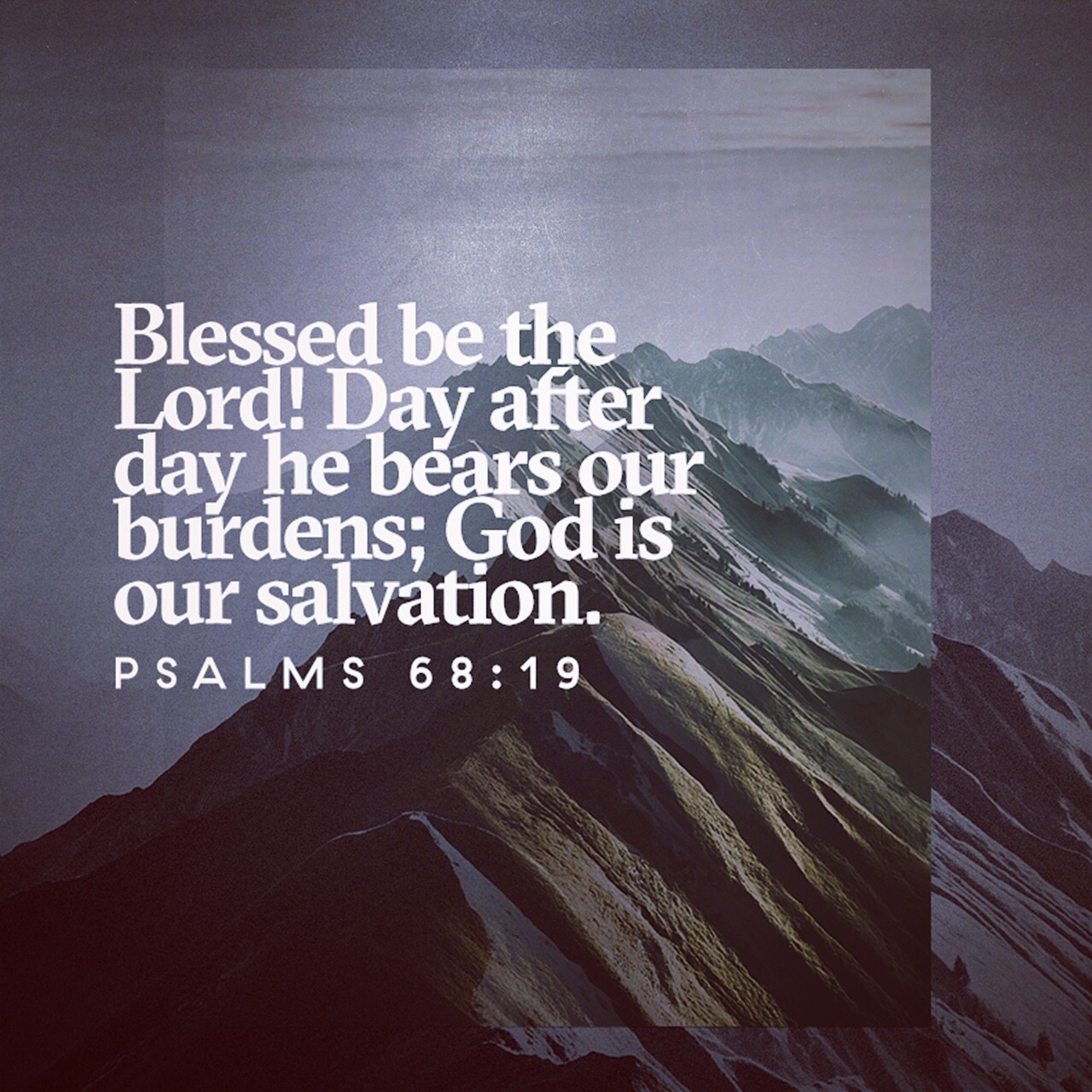
“Blessed be the Lord, Who daily loads us with benefits, The God of our salvation! Selah Our God is the God of salvation; And to GOD the Lord belong escapes from death.” (Ps.68:19-20)
Of all the names of God, surely this should make us rejoice the most. God is our Savior! He Himself is our salvation. He doesn’t give it apart from Himself, but it is in a personal relationship with Him that we are saved.
He calls us by His Spirit—opens our blind eyes to our need. The Father has sent His Son to bring us salvation in Christ’s death and resurrection.
The death the psalmist refers to goes beyond salvation from physical death, but deliverance from the second death. This second death is what we call Hell—the everlasting state of torment for the wicked. It is what I deserve and from which I can do nothing to evade. That is why I need a Savior, and what God is to me.
The old hymn states it like this:
I was sinking deep in sin,
far from the peaceful shore,
very deeply stained within,
sinking to rise no more;
but the Master of the sea
heard my despairing cry,
from the waters lifted me;
now safe am I.
Souls in danger, look above,
Jesus completely saves;
he will lift you by his love
out of the angry waves.
He’s the Master of the sea,
billows his will obey;
he your Savior wants to be -
be saved today.
Love lifted me!
Love lifted me!
When nothing else could help,
Love lifted me.
Love lifted me!
Love lifted me!
When nothing else could help,
Love lifted me.” (James Rowe)
Wednesday, September 25, 2019
PORTRAITS OF GOD: THE DEFENDER
“A...defender of widows, Is God in His holy habitation.” (Ps.68:5)
In that ancient world, few were more helpless than a widow. They were often taken advantage of by the powerful. Yet, we are reminded that God is a strong defender of even the most helpless.
Jesus described Satan as one who seeks to kill and destroy—and said he was a murderer. If he could, the Devil would kill you on the spot—but we have a Defender far greater. The most powerful oppressor is no match for our great Protector. “You are of God, little children, and have overcome them, because He who is in you is greater than he who is in the world.” (1 John 4:4).
Why should we fear? Of whom or what should we be afraid?
Tuesday, September 24, 2019
PORTRAITS OF GOD: THE FATHER
“A father of the fatherless...is God in His holy habitation.” (Ps.68:5)
Jesus told us to pray, “Our Father in heaven,” which echoes the truth in this Psalm. This is the first and most familiar metaphor of the first person of the Trinity. It is a portrait of God—a word picture that we cherish.
Good fathers—and the ideal of what they should be—are shadows of which God is the standard. Earthly fathers are imperfect—even the best of us. The Eternal Father is the only perfect Parent.
He will never abandon us—as some Dads do—thus, the Psalmist reminds us that God is a Father to the fatherless. God would never abuse us, as some sinful human fathers do to their children. He will correct us for our good, motivated by love,
“‘For whom the LORD loves He chastens, And scourges every son whom He receives.’
Furthermore, we have had human fathers who corrected us, and we paid them respect. Shall we not much more readily be in subjection to the Father of spirits and live?” (Hebrews 12:6, 9)
Even good human fathers are limited in what they can do, but not our Heavenly Father. A father may desire to do something for his child and be without the capacity, yet Father God has infinite power and provision.
I know I love my children, and yet the love of God is supreme—and He loves each of you! Multiply the love of a good father exponentially and you will be describing the boundless love of God our Father.
You may only truthfully call God your Father if you have been born into His family. That relationship comes through giving your life to Jesus Christ—faith that receives the grace He has to save you. Can you call God your Father today?
Monday, September 23, 2019
PORTRAITS OF GOD
“A father of the fatherless, a defender of widows, Is God in His holy habitation.” (Psalm 68:5)
A picture is worth a thousand words. That’s the old saying—and it’s true. There is something about a visual image that connects with our brain more quickly and clearly than words. We have employed many words about God during the course of this series, “The God You Should Know.” We have considered words like omnipotent, omniscient, omnipresent, for example—all important words—but in the end we have discovered that God is so far beyond our vocabulary.
So, the Holy Spirit has also taken His brush, and on the canvas of Scripture, has painted several portraits of God. We will examine seven in these studies, though there are many more we might view in the Sacred Text.
The portraits of God we will contemplate are: God as Father (which we see in Psalm 68:5), Defender (also seen in this verse), Savior (found in this same Psalm), Shepherd, Helper, Rock, and Sun. Other Psalms display the wonder of God in these ways. Join us as we travel through the Art Gallery of God!
Saturday, September 21, 2019
LOVING ENEMIES
Read 2 Kings 6:8-23.
Can we be more concerned with winning souls than winning arguments?
Syrian raiders invaded Israel. The power of God, however, blinded them, and Elisha the prophet leads them to Samaria, where inside the city walls, their vision is restored, and they are surrounded by Israeli forces. The King of Israel sees the opportunity for revenge. That is the natural reaction. But, instead, Elisha extends mercy and grace.
Think about it. The Syrian soldiers were merely submitting to their sovereign. They were blinded. The spiritual man overcomes evil with good. He conquers with love. Those on the winning side reach out to the losing side, realizing they are just following Satan’s orders. They are blind to the truth and we need to pray that their eyes would be opened.
We can win people by love. That’s the way our hearts were won. Who is our war with anyway? Not with sinners. “For we do not wrestle against flesh and blood, but against principalities, against powers, against the rulers of the darkness of this age, against spiritual hosts of wickedness in the heavenly places.” (Eph 6:12).
The Syrian soldiers were given mercy and grace. It was mercy that spared them from the death they deserved, and it was grace that gave them what they did not merit—a feast and freedom! God has done that for us! Now, He expects us to show mercy and grace to other sinners.
We must be careful that in our stand for God and for truth, that it doesn’t sound like an attack on the people Jesus died for. Can we speak against the act of homosexuality and witness to the homosexual? Can we cry against the act of abortion and reach out to the abortionist and those who have had abortions? Can we find the balance of Jesus who told the adulterous woman, “Neither do I condemn you. Go and sin no more?” That balance is seen in that Jesus was “holy, harmless, undefiled, separate from sinners,” (Heb.7:26), and yet was called the “friend of...sinners” (Lk.7:34).
We must never compromise Biblical convictions. Yet, this same Bible contains these words:
“You have heard that it was said, ‘An eye for an eye and a tooth for a tooth.’ But I tell you not to resist an evil person. But whoever slaps you on your right cheek, turn the other to him also. If anyone wants to sue you and take away your tunic, let him have your cloak also. And whoever compels you to go one mile, go with him two. Give to him who asks you, and from him who wants to borrow from you do not turn away. You have heard that it was said, ‘You shall love your neighbor and hate your enemy.’ But I say to you, love your enemies, bless those who curse you, do good to those who hate you, and pray for those who spitefully use you and persecute you, that you may be sons of your Father in heaven; for He makes His sun rise on the evil and on the good, and sends rain on the just and on the unjust. For if you love those who love you, what reward have you? Do not even the tax collectors do the same? And if you greet your brethren only, what do you do more than others? Do not even the tax collectors do so? Therefore you shall be perfect, just as your Father in heaven is perfect.” (Matt.5:38-48).
Subscribe to:
Posts (Atom)